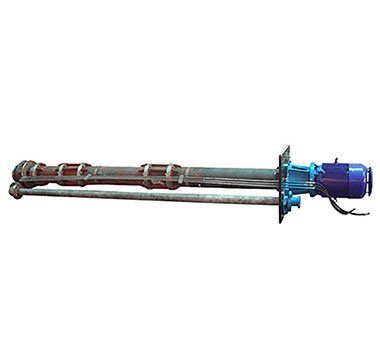
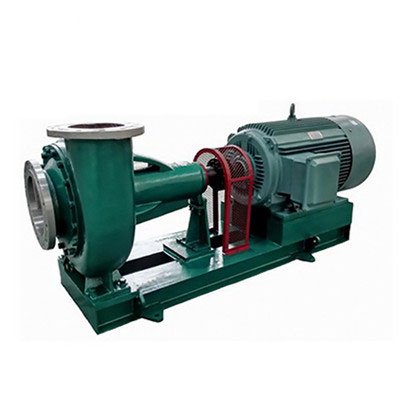
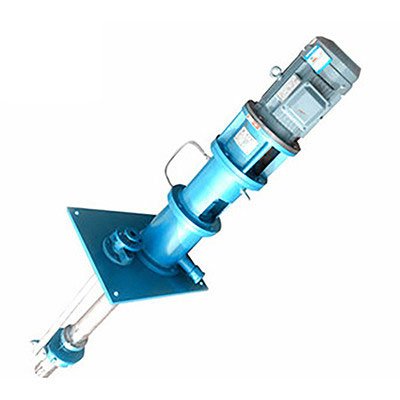
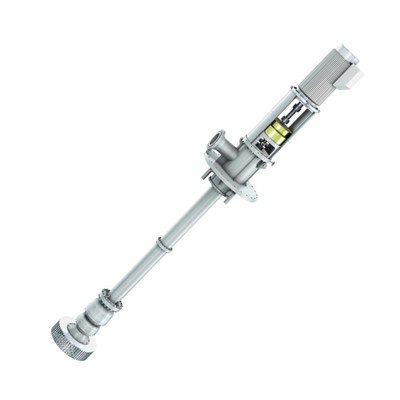
Насосы серии PLC послужили основой для разработки насосов серии PLCF. Этот погружной насос с длинным валом (также известный как насос для отстойника абсорбционной колоны) специально разработан для подземных резервуарных станций в системах десульфуризации дымовых газов электростанций. Глубина погружения составляет от 3 до 6 метров. Он подходит для перекачки сред, содержащих взвешенные частицы, коррозионных и абразивных жидкостей, вязких жидкостей, жидкостей, образующих накипь, а также жидкостей, содержащих газ. Благодаря передовой конструкции, высокой общей надёжности и длительному сроку службы насос серии PLCF широко применяется в области десульфуризации дымовых газов на электростанциях.
Конструктивные особенности погружного насоса для десульфуризации PLCF
Имеет секционную конструкцию с жесткими валами для каждой секции. Подшипники оснащены пылезащитными кожухами с обеих сторон, что исключает необходимость смазки консистентной смазкой. Устройство принудительной смазки обеспечивает длительный срок службы уплотнения.
Рабочее колесо имеет закрытую конструкцию с широким потоком, что облегчает прохождение среды, содержащей твердые частицы, и предотвращает засорение. Оно оснащено передними и задними лопастями. Передние лопасти препятствуют обратному потоку среды в направлении входа насоса, а задние — уравновешивают осевую силу и снижают осевое давление утечки, что позволяет повысить КПД насоса.
В валовом уплотнении используется картриджная конструкция с двойным механическим уплотнением, обеспечивающая длительную и стабильную работу насоса в погруженном состоянии.
Оснащенное интеллектуальным устройством контроля и защиты, оно предотвращает утечку рабочей жидкости и оптимизирует внешние условия эксплуатации уплотнения. Оно решает техническую проблему повреждения подшипников, вызванного выходом из строя механического уплотнения, и повышает общую надежность и срок службы насоса. Данное устройство отличается оригинальной конструкцией, простой структурой, легкостью изготовления и превосходными эксплуатационными характеристиками.
Вал имеет большой диаметр и меньшее количество уступов, что обеспечивает превосходную жесткость.
Опорная труба и опорный корпус отличаются высокой жесткостью, что обеспечивает стабильную работу насоса.
Определение модели
Пример: PLCF65-310
PLCF: Износостойкий и коррозионностойкий погружной насос с длинным валом
65: Диаметр выпускного отверстия
310: Наружный диаметр рабочего колеса
Структурный анализ погружных насосов для десульфуризации
В настоящее время погружные насосы, используемые в системах десульфуризации, подразделяются на два конструктивных типа: с безуплотнительной конструкцией и с механическим уплотнением.
1. Конструкция без уплотнения
Как показано на рисунке 1, между втулкой рабочего колеса и задней крышкой отсутствует уплотнительный элемент, при этом предусмотрен значительный зазор. Такая конструкция обычно применяется в обычных погружных насосах для перекачки шлама, глубина резервуара с шламом в которых, как правило, не превышает 2,5 м, и редко используется в погружных насосах для десульфуризации.
При применении данной конструкции в погружных насосах с длинным валом в системах десульфуризации возникают две серьезные проблемы. Во-первых, длинный консольный вылет рабочего колеса приводит к значительному прогибу под действием центробежной силы во время работы, что вызывает вибрацию насоса и даже нарушение его нормальной работы. Во-вторых, в отсутствие уплотнения вала вал насоса работает на высоких оборотах в коррозионно-агрессивных средах, что предъявляет высокие требования к коррозионной стойкости материалов вала.
2. Конструкция механического уплотнения
В большинстве погружных насосов с длинным валом, используемых в системах десульфуризации, применяются механические уплотнения, как показано на рисунке 2. Высокоскоростное вращение рабочего колеса вертикального насоса под водой создает огромную радиальную силу, что приводит к чрезмерному прогибу вала в месте установки механического уплотнения. Это вызывает неравномерное распределение напряжений на уплотнительных поверхностях и ухудшает герметизирующие характеристики.
Поэтому над механическим уплотнением устанавливаются опоры, чтобы уменьшить длину консоли, а в качестве вспомогательных опор широко используются подшипники качения. При этом механическое уплотнение позволяет эффективно изолировать шлам от вала насоса. Для изготовления вала можно использовать обычные материалы вместо дорогостоящих коррозионно-стойких материалов, что снижает производственные затраты.
Основные особенности конструкции уплотнения вала для погружных насосов с длинным валом, используемых в системах десульфуризации
В системах десульфуризации для уплотнения вала погружных насосов с длинным валом следует использовать механические уплотнения. В связи с особыми условиями эксплуатации погружных насосов с длинным валом требования к механическим уплотнениям отличаются от требований, предъявляемых к обычным моделям.
Для обеспечения износостойкости и эрозионной стойкости пар трения в средах, содержащих твердые частицы, твердость материалов пар трения должна превышать твердость абразивных частиц. Обычно рекомендуется сочетание «твердое-твердое», с использованием таких материалов, как карбид вольфрама и карбид кремния. По сравнению с карбидом вольфрама карбид кремния обладает более высокой твердостью, превосходной теплопроводностью, отличной химической стойкостью и самосмазывающимися свойствами, хотя и имеет более высокую стоимость. В то же время ширина пары трения должна быть больше, чем у механических уплотнений для насосов чистой воды, а сама пара трения должна иметь острые кромки, чтобы максимально предотвратить попадание твердых частиц на уплотнительные поверхности. Пружина выполнена в неподвижном исполнении, при этом компенсация осуществляется за счет неподвижного кольца. Установленная внутри сальника и изолированная от твердых частиц, пружина эффективно снижает износ и предотвращает отказы, вызванные засорением, обеспечивая гибкую, стабильную и надежную компенсацию.
Поскольку суспензия содержит большое количество твердых частиц, уплотнительная камера выполнена в виде открытой конструкции, что позволяет предотвратить отложение частиц вокруг пары трения после остановки насоса, которое могло бы повлиять на последующий запуск. Такая конструкция также позволяет промывочной воде из системы десульфуризации вымывать твердые остатки изнутри уплотнительной камеры.
Камера уплотнения имеет оптимизированную конструкцию, обеспечивающую полный отвод газа и предотвращающую сухое трение механического уплотнения. Для отвода газа в задней части корпуса насоса просверлены вентиляционные отверстия.
Конструкция механического уплотнения должна выбираться с учетом содержания твердых частиц в суспензии. Для суспензий с низким содержанием твердых частиц применяется одностороннее механическое уплотнение, охлаждение и смазка которого осуществляются за счет самой рабочей среды. Конструкция уплотнения должна обеспечивать минимальное накопление частиц вокруг пары трения. Для суспензий с высоким содержанием твердых частиц смазывающая способность рабочей среды снижается с увеличением содержания частиц. Соответственно, применяется двухстороннее механическое уплотнение с подачей внешней уплотнительной воды для охлаждения, смазки и предотвращения утечек.
Краткое описание длинновальных погружных насосов с системой десульфуризации
Во всех погружных насосах с длинным валом, используемых в системе десульфуризации, применяется погружная опора подшипника, что позволяет уменьшить прогиб рабочего колеса и подавить вибрацию. Для шлама низкой концентрации используются одинарные механические уплотнения без промывочной воды; для шлама высокой концентрации — двойные механические уплотнения с уплотнительной водой. Кроме того, конструкция должна полностью исключать осаждение и отложение рабочей среды вокруг пар трения, а также учитывать требования к отводу газа на периферии пар трения механического уплотнения.