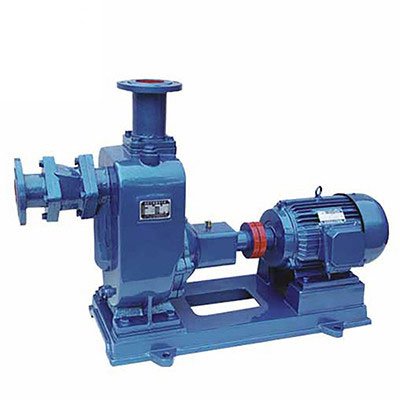
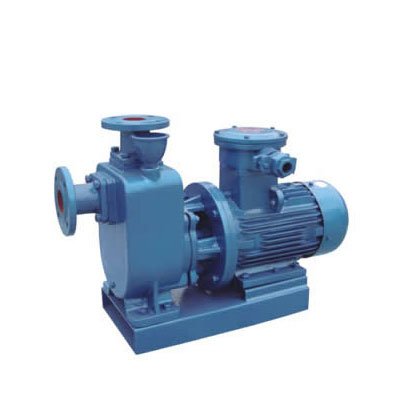
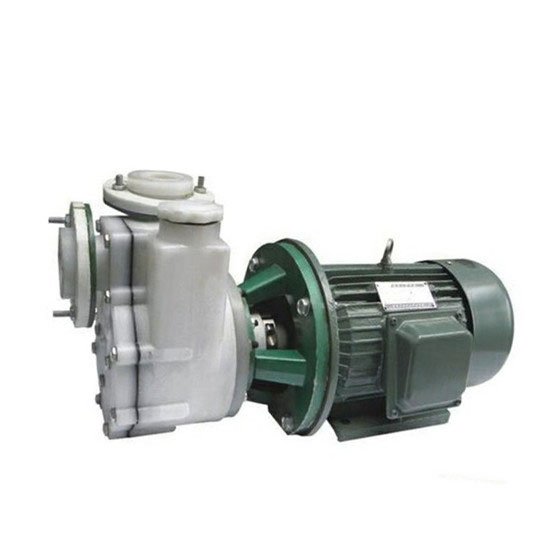
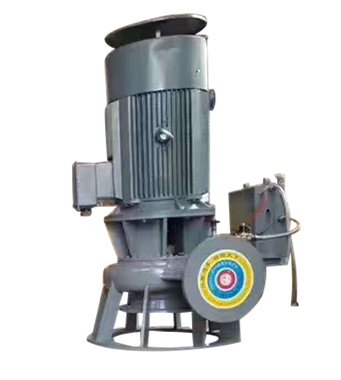
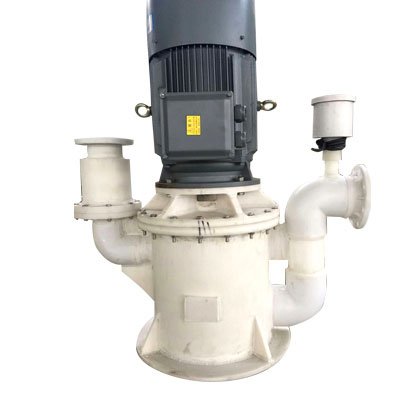
The ZW type self-priming sewage pump is also known as a solid-liquid pump or trash pump. Featuring a unique hydraulic design, it integrates self-priming and non-clogging sewage discharge functions. It requires no bottom valve or priming water like ordinary clean water self-priming pumps. Meanwhile, it can pump sewage containing large solid particles, fibrous impurities, sediments, mine waste residues, fecal sewage and all types of engineering wastewater.
The impeller is enclosed in an independent impeller chamber, which is connected to the pressure chamber. When the impeller rotates, the liquid inside the pump generates a strong axial vortex, forming a vacuum at the inlet and producing delivery head at the outlet. Therefore, impurities can be smoothly discharged through the pressure chamber with a fully unobstructed flow passage. Its sewage disposal performance is incomparable to that of other conventional self-priming sewage pumps.
Application of ZW Self-priming Sewage Pump
It is widely applicable to municipal sewage projects, light industry, papermaking, textile, food, chemical industry, electric power, petroleum, mining, river and pond aquaculture and other fields. It is an ideal trash pump in China for conveying media containing solid particles, fibers, slurry and mixed suspensions.
Operating Conditions of ZW Self-priming Sewage Pump
Ambient temperature: ≤ 45℃; medium temperature: ≤ 60℃
PH range: 6–9 for cast iron pumps; 3–14 for stainless steel pumps
Passable particle diameter: 60% of pump caliber; fiber length: 5 times of pump caliber
Total impurity weight in medium: no more than 15% of the total medium mass
Medium specific gravity: ≤ 1240 kg/m³
Precautions for Operation of ZW Self-priming Sewage Pump
1. Pre-start Preparation and Inspection
For this series of self-priming pumps, high-quality calcium-based grease or No.10 machine oil shall be used for lubrication according to operating conditions. Pumps lubricated with grease require regular refilling into the bearing housing; for oil-lubricated pumps, replenish oil in time if the oil level is insufficient.
Confirm the liquid stored inside the pump casing is above the upper edge of the impeller. If insufficient, add liquid directly through the filling port on the pump casing. Do not start the pump with insufficient liquid, otherwise abnormal operation and mechanical seal damage will occur.
Inspect rotating parts for jamming and collision faults.
Check the anchor feet of the pump body and all connecting nuts for looseness.
Verify the coaxiality and parallelism between the pump shaft and motor shaft.
Inspect the suction pipeline for air leakage; eliminate any air leakage fault if exists.
Open the suction pipeline valve, and slightly open (do not fully open) the discharge control valve.
2. Starting and Operation
- Jog the self-priming pump and check whether the pump shaft rotates in the correct direction.
- Observe for abnormal noise and vibration during operation.
- Monitor the readings of the pressure gauge and vacuum gauge. After startup, once the readings stabilize after a period of fluctuation, the pump is fully primed and enters normal liquid delivery.
- During the self-priming process before normal operation, closely monitor the temperature rise of liquid inside the pump. If the process takes too long and the liquid temperature becomes excessively high, stop the pump and troubleshoot.
- If excessive liquid temperature causes difficult self-priming, shut down temporarily. Cool down the pump by allowing liquid backflow from the discharge pipeline or adding liquid directly through the filling port on the pump casing, then restart the pump.
- Severe vibration and noise during operation are usually caused by cavitation, which results from two main factors: excessive flow velocity in the suction pipeline or excessive suction lift.
- When the flow velocity is too high, adjust the discharge control valve to increase the pressure gauge reading. Clear blockages in the suction pipeline in a timely manner; if the suction lift is excessive, properly reduce the pump installation height.
- If the pump stops unexpectedly and needs to be restarted, keep the discharge control valve slightly open (not fully closed). This facilitates gas discharge during self-priming and ensures the pump starts under light load.
Regularly inspect the pipeline system for liquid leakage.
3.Pump Shutdown
- First, close the gate valve on the discharge pipeline.
- Stop the pump operation.
- In cold seasons, drain all reserved liquid inside the pump casing and cooling water in the bearing body to prevent component cracking caused by freezing.